
Pros and Cons of Landscape Construction Materials in Massachusetts
Designing and building an outdoor space in Massachusetts presents unique challenges—and opportunities. From freezing winters and fluctuating moisture levels to hot summers and coastal influences, choosing the right landscape construction materials is critical for durability, aesthetics, and long-term maintenance.
Whether you are planning backyard landscaping, upgrading lawn watering systems, or investing in custom landscaping, understanding the strengths and weaknesses of common materials can help you make smarter decisions. In this article, we explore the most popular landscape construction materials used in New England, along with their pros and cons, and how they interact with irrigation systems, lawn care services, and landscape maintenance.
Natural Stone
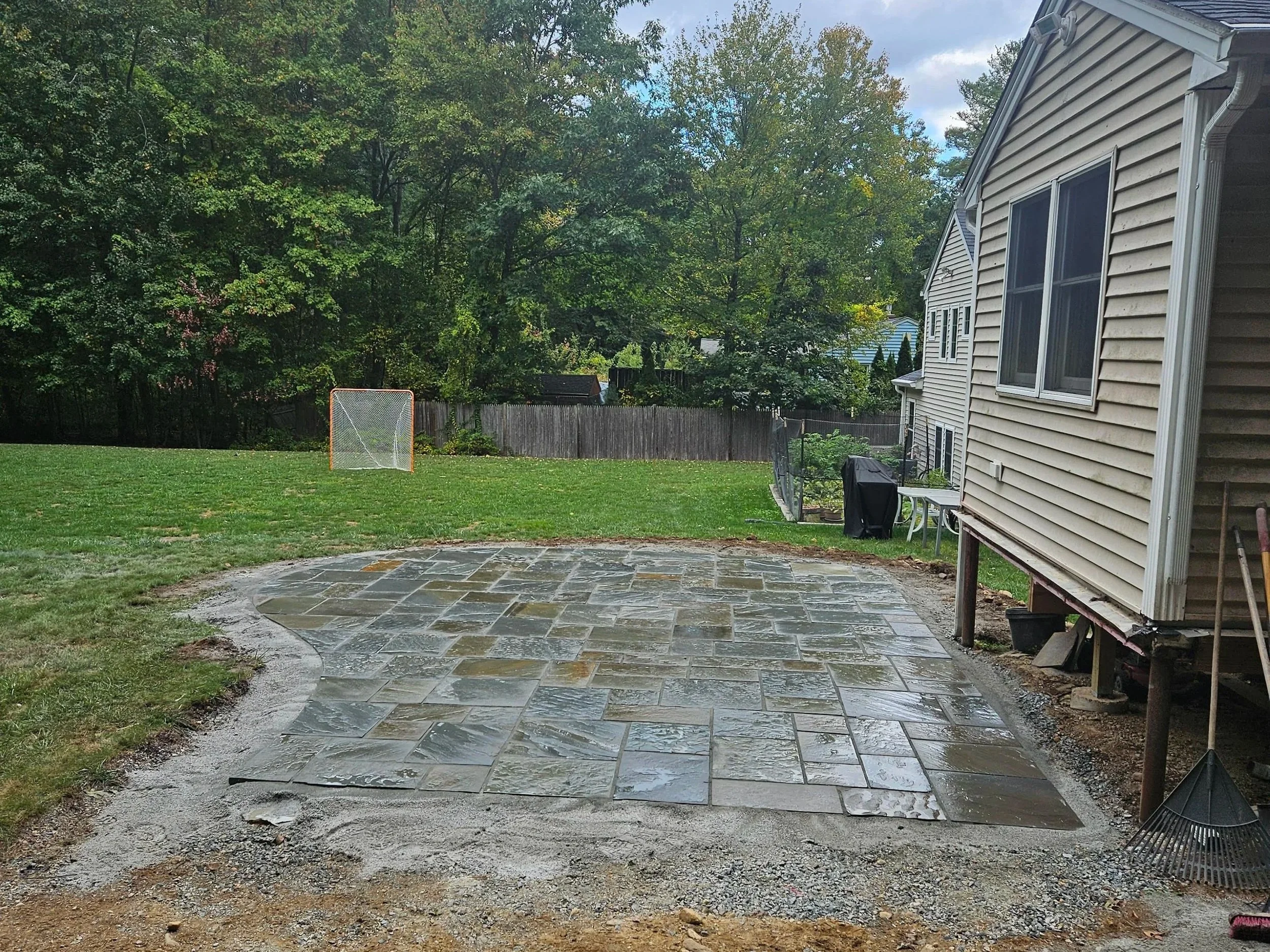
Patio with natural stone in Billerica, Mass.
Pros of Natural Stone
Natural stone is one of the most durable and visually appealing materials used in outdoor landscaping. Granite, bluestone, and fieldstone are especially popular in New England due to their ability to withstand freeze-thaw cycles.
Extremely durable and weather-resistant
Timeless aesthetic that complements traditional and modern landscape design
Adds long-term value to residential properties
Low maintenance once properly installed
Natural stone works beautifully for walkways, retaining walls, patios, and garden borders. It pairs well with garden landscaping elements such as perennial beds, water features, and water-efficient landscaping designs.
Cons of Natural Stone
High upfront cost compared to manufactured alternatives
Installation requires experienced professionals
Heavy material can increase labor and equipment needs
Because stone installation often impacts grading and drainage, coordination with a skilled landscape contractor is essential—especially when integrating lawn irrigation or drip irrigation systems beneath hardscapes.
Concrete Pavers
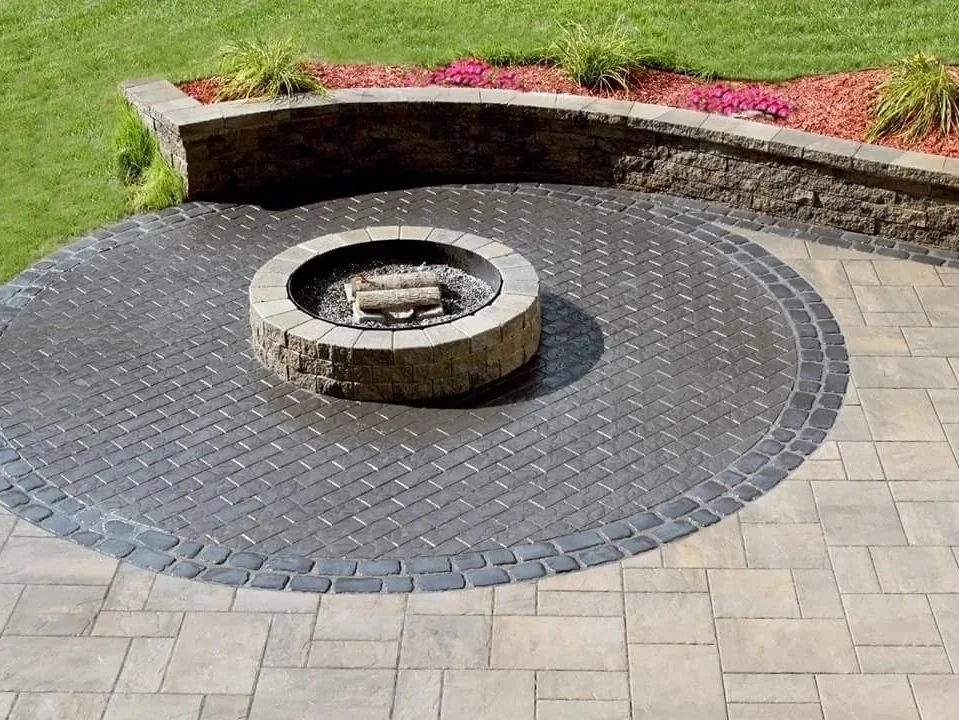
Fire pit with patio and retaining wall using different pavers to create a unique look.
Pros of Concrete Pavers
Concrete pavers are a popular alternative to natural stone in residential landscaping projects.
More affordable than natural stone
Consistent sizing allows for precise landscape construction
Available in a wide range of colors and textures
Easier to repair—individual pavers can be replaced
Pavers are ideal for patios, driveways, and walkways, and they allow easier access for sprinkler repair or sprinkler installation if underground systems need servicing.
Cons of Concrete Pavers
Can fade over time due to UV exposure
Less natural appearance than real stone
Susceptible to shifting if base preparation is inadequate
In areas with heavy snow loads, pavers require proper installation to prevent heaving. Regular landscape maintenance helps ensure longevity.
Pressure-Treated Wood
Pros of Pressure-Treated Wood
Wood remains a popular material for decks, raised garden beds, and fencing in garden care and backyard landscaping.
Affordable and widely available
Easy to cut and customize
Suitable for DIY and professional projects
Wood features integrate seamlessly with garden landscaping and softscape elements, especially in residential settings.
Cons of Pressure-Treated Wood
Susceptible to rot, warping, and insect damage
Requires regular sealing and lawn maintenance attention
Shorter lifespan compared to stone or composite materials
In New England’s wet climate, wood structures near lawn irrigation or automatic sprinklers require careful drainage planning to prevent water damage.
Composite Decking and Materials
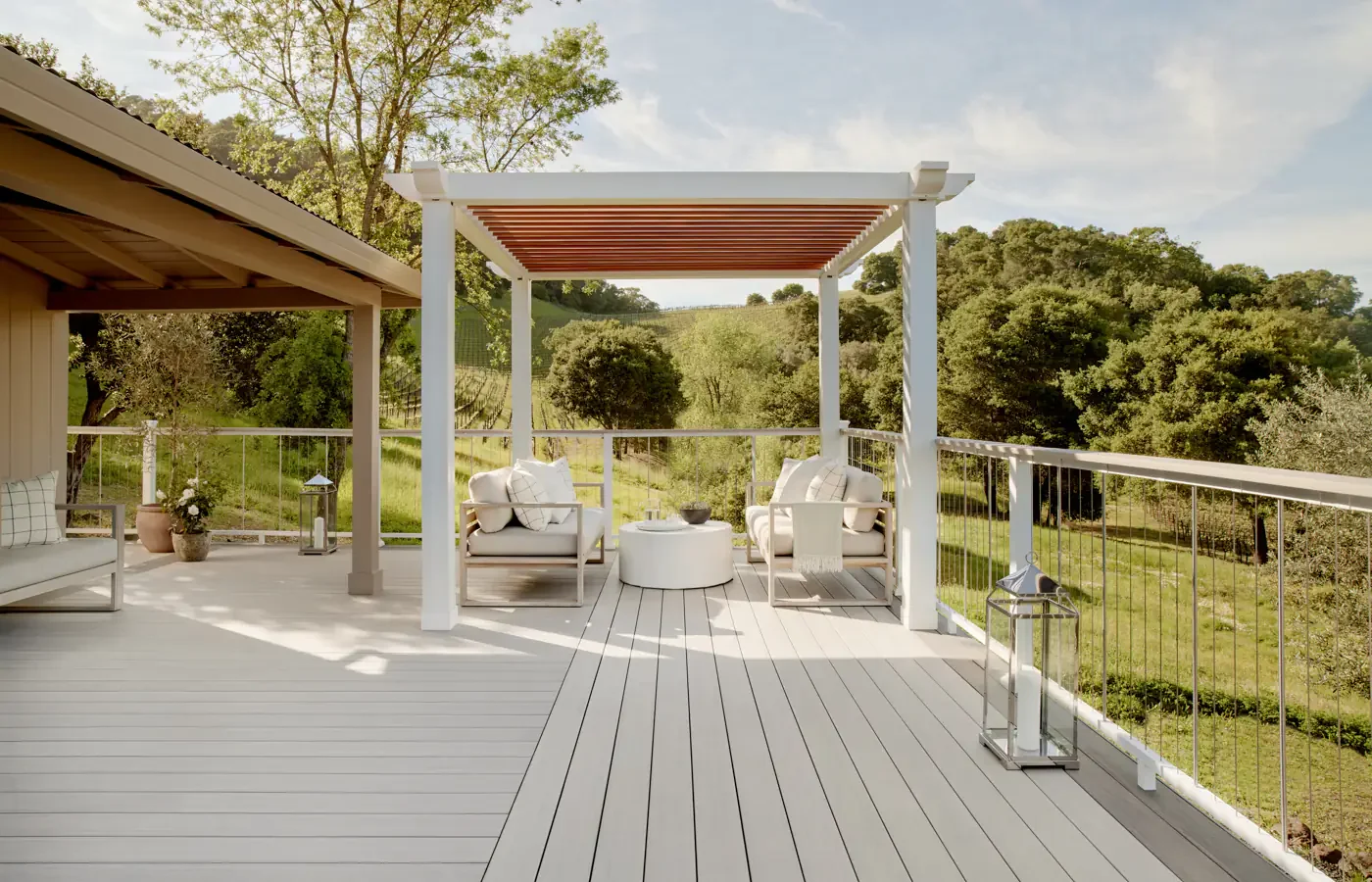
Composite decking from TimberTech to create deck and purgola.
Pros of Composite Materials
Composite materials, made from recycled plastics and wood fibers, are increasingly popular for sustainable outdoor landscaping.
Highly resistant to moisture and temperature changes
Minimal maintenance required
Long lifespan
Environmentally friendly option
Composite materials are ideal for homeowners seeking water-efficient landscaping and reduced long-term landscape maintenance costs.
Cons of Composite Materials
Higher upfront cost than wood
Can retain heat in direct sunlight
Limited natural texture compared to real wood
Despite the higher initial investment, composite materials often pay off through reduced lawn care services and maintenance needs over time.
Brick
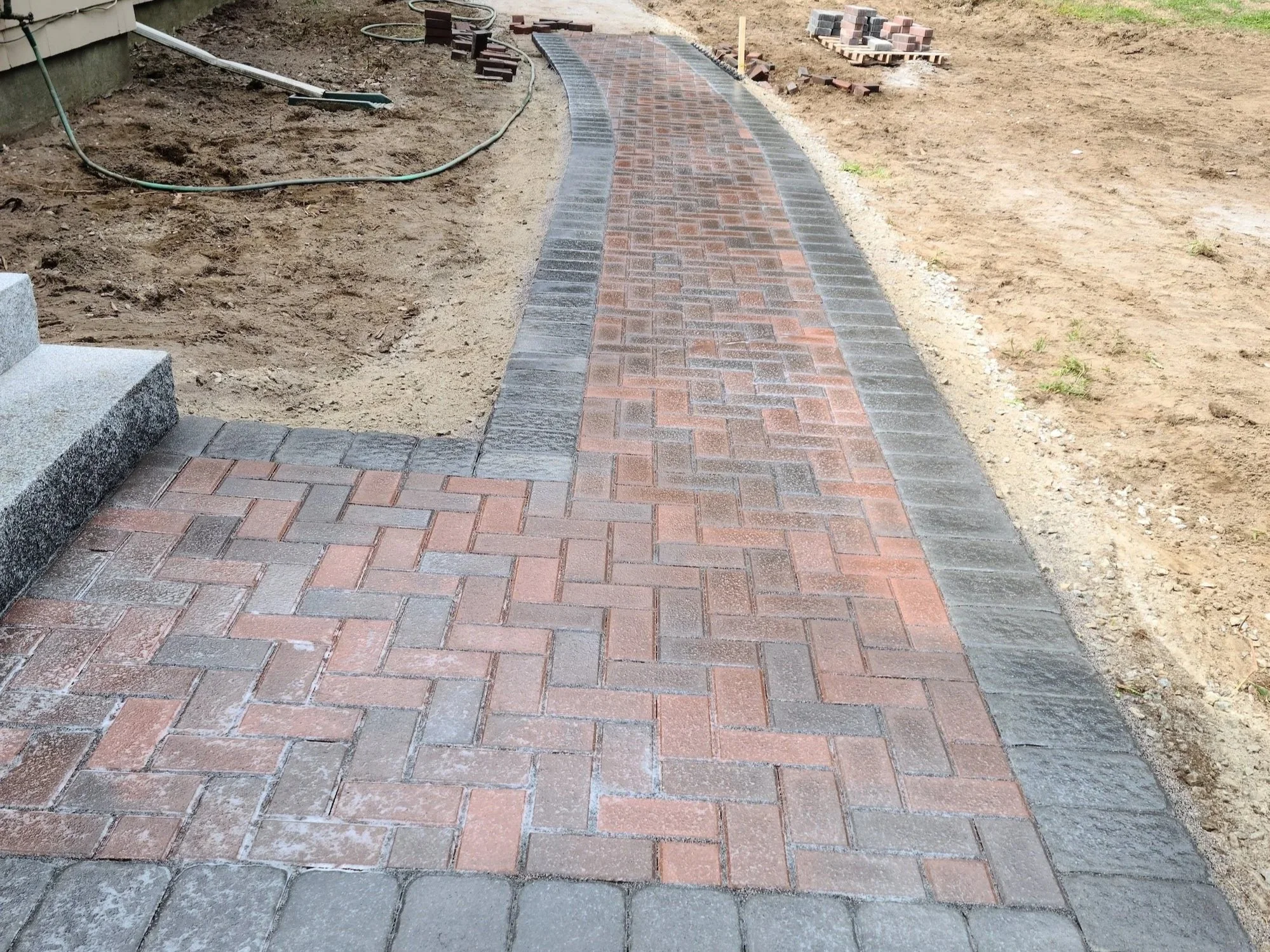
Brick walkway with paver border for added interest in Chelmsford, Mass.
Pros of Brick
Brick offers a classic New England aesthetic and works well in traditional landscape design.
Durable and weather-resistant
Timeless appearance
Recyclable and eco-friendly
Brick is commonly used for walkways, edging, and patios and blends beautifully with historic homes and formal garden landscaping.
Cons of Brick
Can crack under severe freeze-thaw conditions
Limited color range
Requires skilled installation
Brick installations should account for drainage to prevent pooling near lawn watering systems or irrigation systems.
Gravel and Crushed Stone
Pros of Gravel
Gravel is a versatile and cost-effective material often used in pathways, driveways, and decorative beds.
Excellent drainage properties
Affordable and easy to install
Ideal for water-efficient landscaping
Low maintenance
Gravel works especially well around drip irrigation systems, allowing water to reach plant roots while minimizing evaporation.
Cons of Gravel
Can shift or scatter over time
Not ideal for high-traffic areas
Requires edging to maintain clean lines
While gravel reduces water usage, it may require periodic replenishment as part of regular landscape maintenance.
Turfgrass vs. Alternative Ground Covers
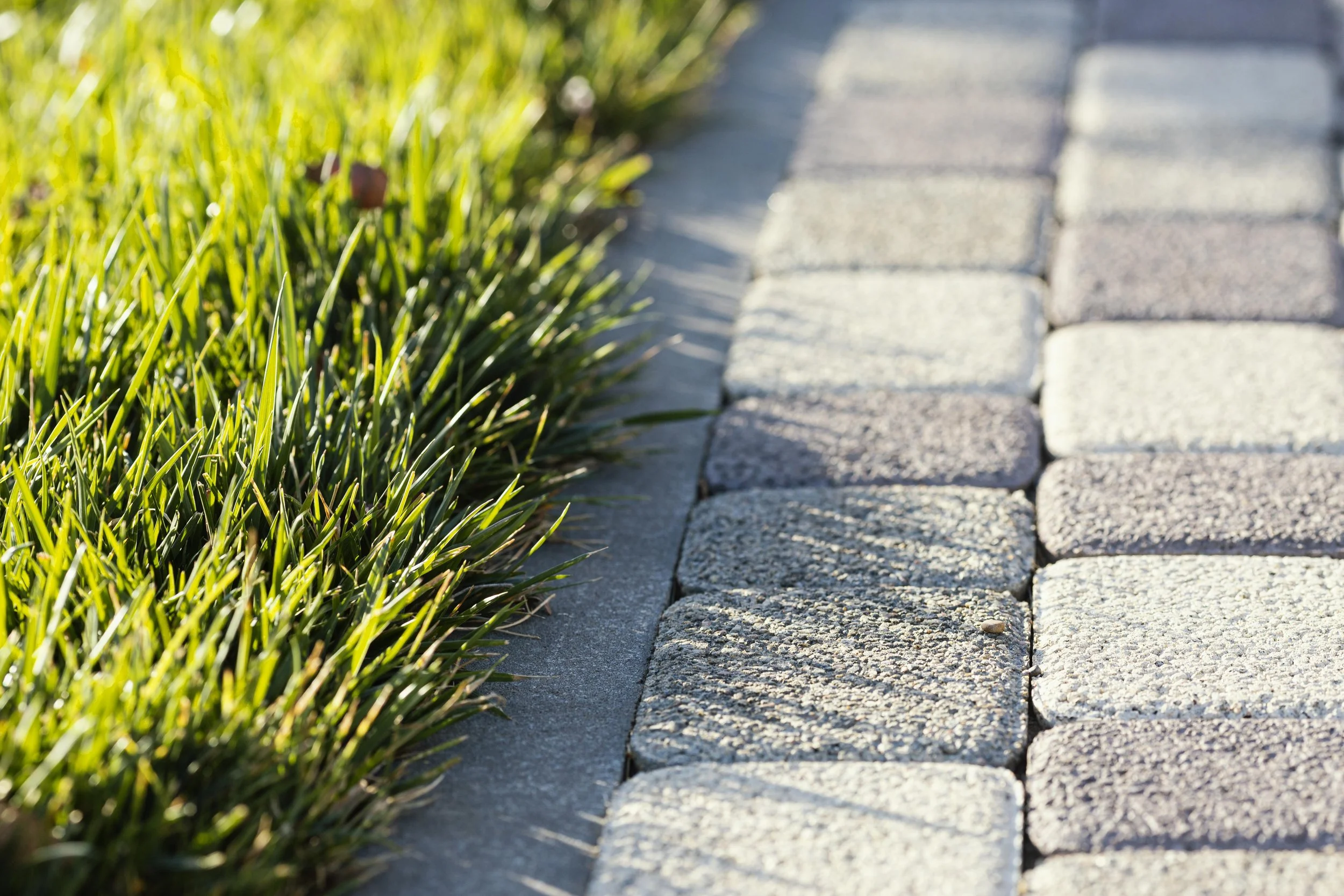
Traditional turf grass with paver walkway. (Image by Freepik)
Pros of Traditional Turfgrass
A lush green lawn remains a cornerstone of New England lawn care services.
Visually appealing and functional
Ideal for families and pets
Compatible with automatic sprinklers and lawn irrigation
With professional sprinkler installation and efficient lawn watering systems, turfgrass can thrive even during dry summers.
Cons of Turfgrass
Requires regular mowing, fertilizing, and watering
Higher long-term lawn maintenance costs
Less eco-friendly than native ground covers
Pros of Alternative Ground Covers
Lower water usage
Reduced mowing and maintenance
Supports local ecosystems
Ground covers pair well with drip irrigation and are increasingly popular in custom landscaping projects.
Cons of Alternative Ground Covers
Slower to establish
Limited tolerance for foot traffic
Integrating Materials with Irrigation Systems
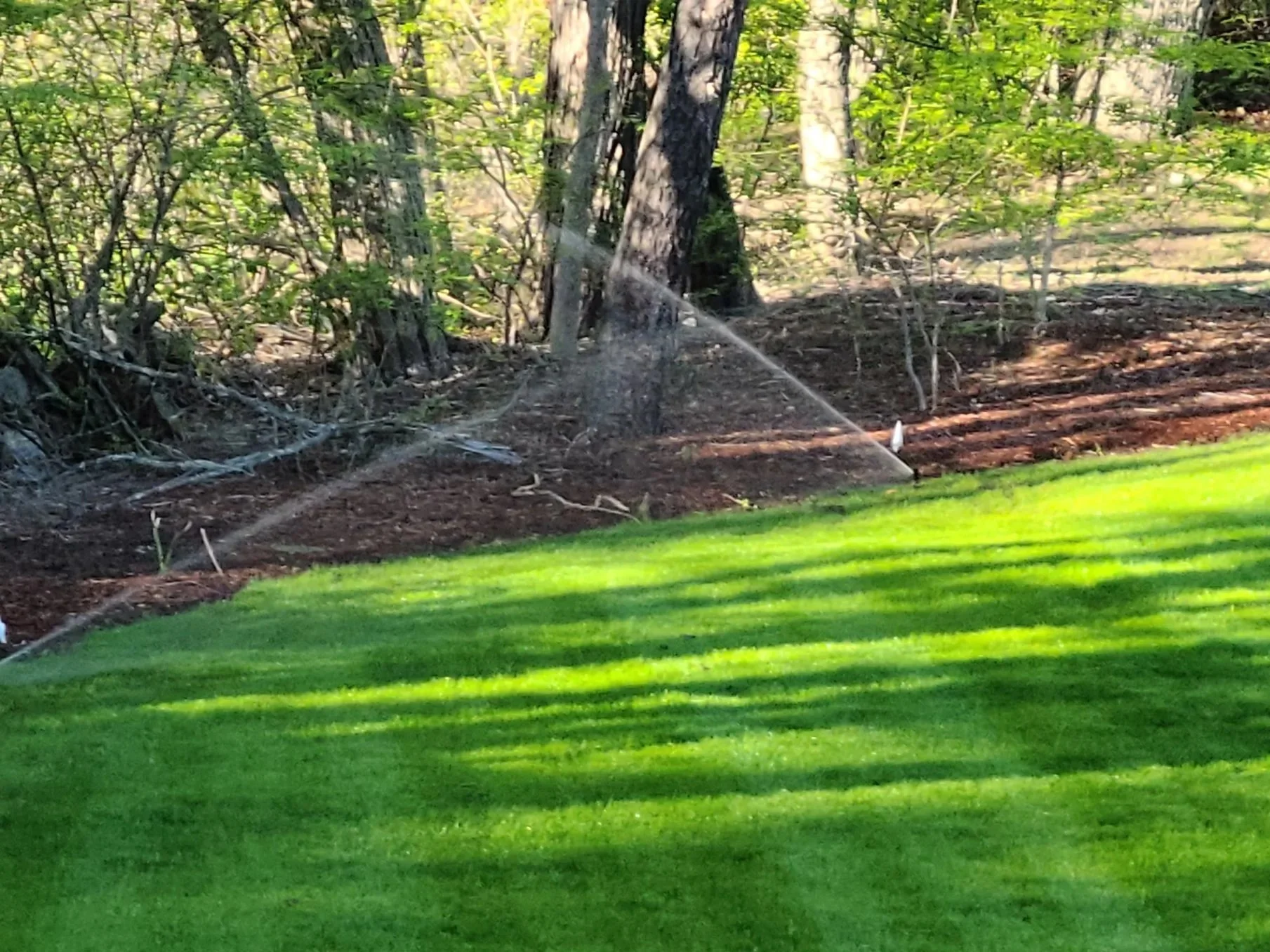
Regardless of material choice, successful landscaping in New England depends on smart water management. Residential irrigation, sprinkler repair, and routine system checks ensure materials perform as intended.
Automatic sprinklers are ideal for lawns and open spaces
Drip irrigation works best for garden beds and shrubs
Proper grading protects hardscapes from water damage
A professional landscape contractor can coordinate sprinkler installation, drainage, and material selection for optimal results.
Final Thoughts
Choosing the right materials for landscape construction in New England requires balancing aesthetics, durability, cost, and maintenance. From natural stone and brick to gravel, wood, and modern composites, each option offers distinct benefits and drawbacks.
When paired with thoughtful landscape design, efficient lawn irrigation, and consistent landscape maintenance, the right materials can transform your outdoor space into a functional, beautiful, and sustainable environment.
Whether you’re planning full backyard landscaping, enhancing garden landscaping, or upgrading your lawn watering systems, working with an experienced landscape contractor ensures your investment will thrive in New England’s demanding climate for years to come.